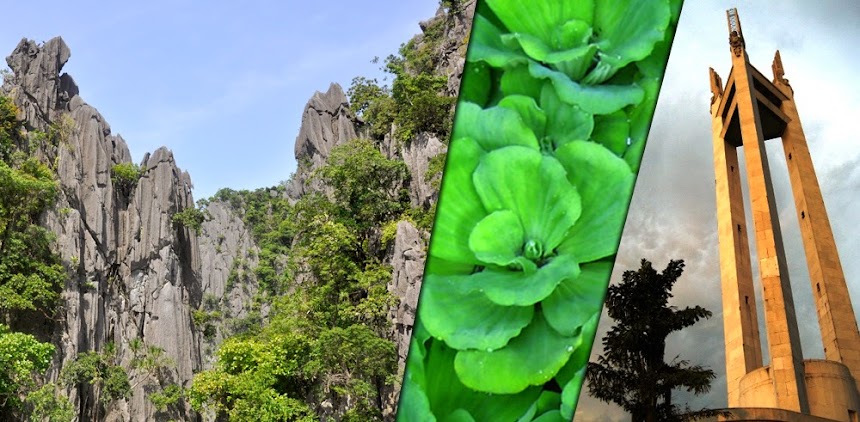
Quezon Memorial Circle (QMC) or Circle as QC (Quezon City) residents endearingly call it, is a national park dedicated to the president of the Commonwealth Philippines and Father of the National Language Manuel L. Quezon.
Among the parks I have laid my eyes on, it is the one closest to my heart because it used to be my playground. I attended tae bo, dance and poi classes offered in the Circle. I used to do my own version of running (combination of walking, hopping and skipping) in the outer circle of the thirty-six hectare elliptical park because it is only a couple of blocks from where I live. As years passed the Circle and I have grown apart, mostly due to my slothful ways. My thrice-a-week-5am trips to the Circle turned to 530am then to 6am, and eventually became a nuisance to my already disorderly life (hah!). As I distanced myself from its presence, it improved its appearance to attract other QC residents that are better and more loyal than me. As the Circle flexes its aesthetic muscles, I cannot help admiring it from a distance, on my way to and from work, especially when it lit itself up in a dizzying myriad of lights during the holiday season last year.
Quezon Memorial Shrine
I have been meaning to drop by the Circle to say hello to a forsaken friend, and the Philippine Orchid Society’s Orchid Show presents itself as the perfect excuse to do so. The Circle does not disappoint as usual.
The focal point of the park is the formidable 66-meter Quezon Memorial Shrine. The height of the shrine represents the age of Quezon when he died of tuberculosis in Saranac Lake, New York.
 |
| The sixty-six meter Quezon Memorial Circle as seen from different locations |
At the top part of the tower hang three angels in mourning. Each angel holds a sampaguita wreath (scientific name is Jasminum sambac), the unofficial national flower of the Philippines. They say that they represent the three main regions in the country—Luzon, Visayas and Mindanao.
 |
| Three mourning angels that represent Luzon, Visayas and Mindanao |
The base of the Quezon Memorial Shrine holds the sarcophagus that contains the remains of Quezon. From what I can remember from my last visit to the shrine, to the left of the sarcophagus is a museum that displays Quezon memorabilia that include a car, a bed, medals and plaques of appreciation and clothes. I do not have a photo of the sarcophagus or of the museum because it is under renovation. According to the guard on duty, it will open in 2015.
 |
| The entrance of Quezon Memorial Shrine Museum |
The rectangular base of the shrine is adorned with reliefs that demonstrate not only key moments in the life of Quezon but also some of the most integral times in Philippine history.
 |
| The time of Tabon cave dwellers (rightmost) to the time of Galleons (leftmost) |
 |
| Reliefs from left to right: José Rizal’s execution in Bagumbayan (see: Rizal Park), Andres Bonifacio—the founder of Katipunan, Apolinario Mabini (see: Saturday Afternoon with Ambeth and Apolinario) and Generals of the Philippine Revolution |
 |
| Quezon in Sickbed (left) and Aurora Quezon and the Quezon Institute |
Quezon Heritage House
The restored vacation house of the Quezon family was transferred to the Circle last year. Unfortunately, it is closed when we visited the park. These photos are taken outside the gate or between the iron grills.
 |
| The sign of the Quezon Heritage House |
 |
| The front view of the Quezon Heritage House |
 |
| The side view of the Quezon Heritage House |
 |
| Some of the details of the Quezon Heritage House |
 |
| QC figure found at the back of the Quezon Heritage House (between the pool and the backdoor). The man in the photo is QC Mayor Herbert Bautista |
Food
One photo I have taken in my many visits to the Circle is that of the inside of the World Peace Bell. I think nobody is crazy enough to kneel down/crawl under the bell to snap a photo of it (unless one is a teenager and wants to immortalize his love for his girlfriend of one-week).
 |
| The World Peace Bell and the pedestrian art its hollow belly contains |
Aside from Quezon-related structures, the Circle boasts of majestic trees and colorful flowers.
 |
| Mother nature is very much present in QMC |
An entry about the Circle is not complete without photos of people doing strenuous activities. There are tons of people running, dancing, doing martial arts, biking and other activities that a health buff will love.
 |
| These exercise equipment are present in several parts of the park |
 |
| One of the many activities practiced in the park |
Once all the physical activities have drained the energy of the parkgoers, they need not worry about food and beverages. There are plenty of choices available right inside the park.
 |
| This section of the park is close to the Quezon Heritage House. This is where we ate. |
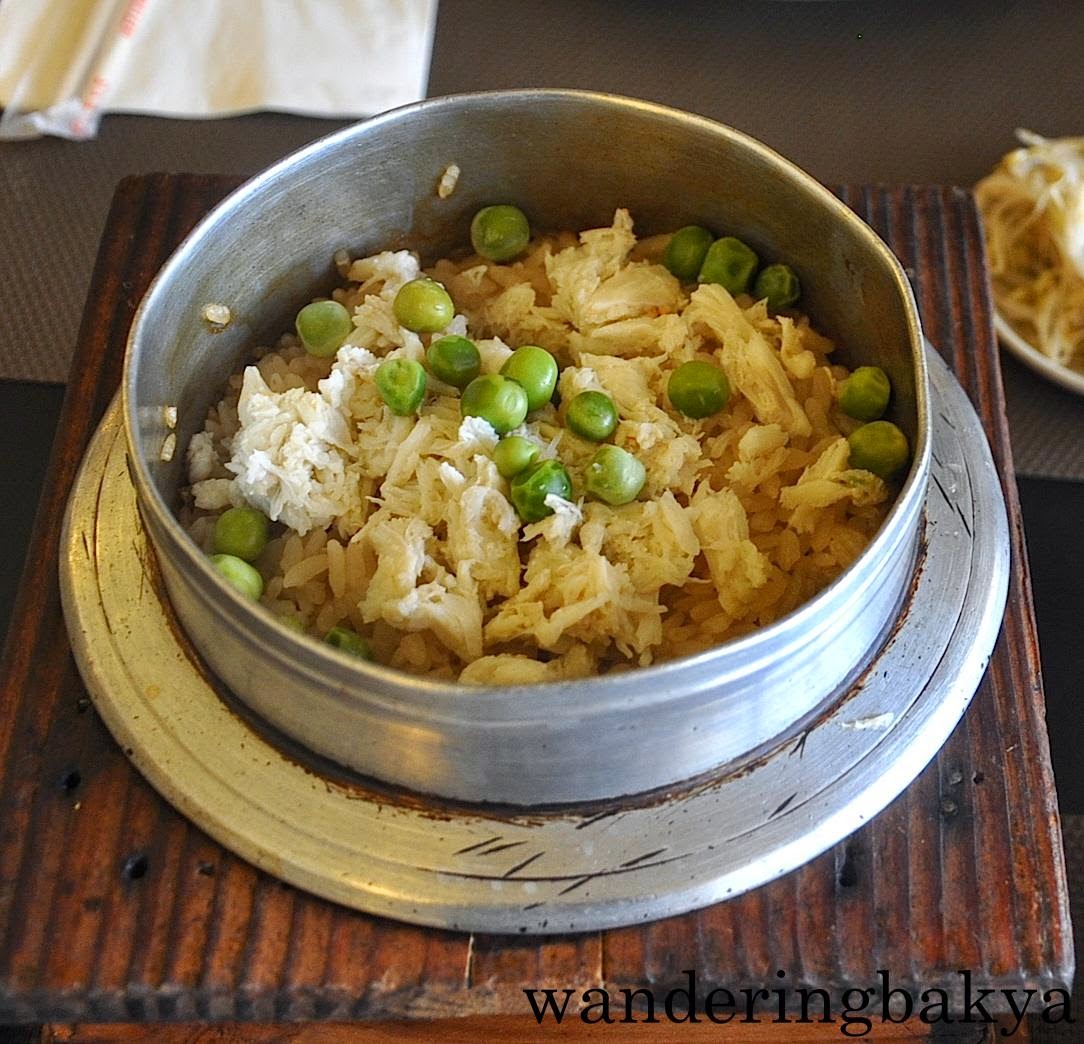 |
| Two of the dishes we ordered for brunch at Kamameshi: Yaki Udon, P270.00 (US $6.20) and Kani Kamameshi, P300.00 (US $6.88) |
 |
| Fresh coconut juice and meat, P25.00 (US $0.57) |
 |
| MSG-laden snacks for children and for the child in all of us |
 |
| More food stalls for the hungry parkgoers |
Tiangge
There are dozens of stalls inside the Circle that sell secondhand items and knock-offs.
 |
| Stalls occupy both sides of the road leading to the shrine |
 |
| Prices of the merchandise start at P50.00 (US $1.15) |
 |
| Shirts as low as P100.00 (US $2.30). Two of the teams that Juan Mata and his beautiful beard have played for: La Roja and The Blues. The star on the shirts symbolizes the 2010 World Cup win of Spain and 2012 Champions League victory of Chelsea FC. |
 |
| Preowned items for sale. The dolls cost P800.00 (US $18.36). |
I spend three hours at the Circle, and I realize how much I have been missing out. It is a vibrant place that is perfect for weekend warriors, friends, couples and families even the ones with small children. The park is very spacious with ample number of picnic tables protected by canopies of green. Like Rizal Park, it is an inexpensive alternative for a trip to the mall. There is no entrance fee for those who arrive on foot while light vehicles pay a minimal amount: P2.00 (US $0.05) for taxi and the most expensive is P100.00 (US $2.30) for bus.
To borrow Anton Ego’s words, I will be returning to the Circle soon, hungry for more.
Where: Elliptical Road, Diliman, Quezon City, Philippines
When: The QMC is open 24/7. The Quezon Heritage House is open for public viewing Tuesday to Sunday, from 9am to 4pm. The Quezon Memorial Shrine Museum is open Monday to Sunday, from 8am to 5pm.
How: From any MRT station, ride a train bound to Quezon Avenue. From the train station, go to Eton Centris where an area is allocated for jeepneys (the most common mode of transportation in the Philippines). Ride a jeepney bound to UP, Philcoa, Fairview or Commonwealth. The trip will take around ten minutes. Alight the vehicle near Quezon City Hall. Use the Belmonte Underpass (if the reconstruction/rehabilitation is over by time of visit) to get to the QMC or wait for the guard to signal the pedestrians to cross from the side of city hall to the Circle.